

Freeze Coffee Beans the Right Way for Espresso
Tired of watching a bag of beautiful beans go stale? Freezing coffee beans for espresso is one of the best-kept practices in specialty coffee, and this guide shows you exactly how to do it right.

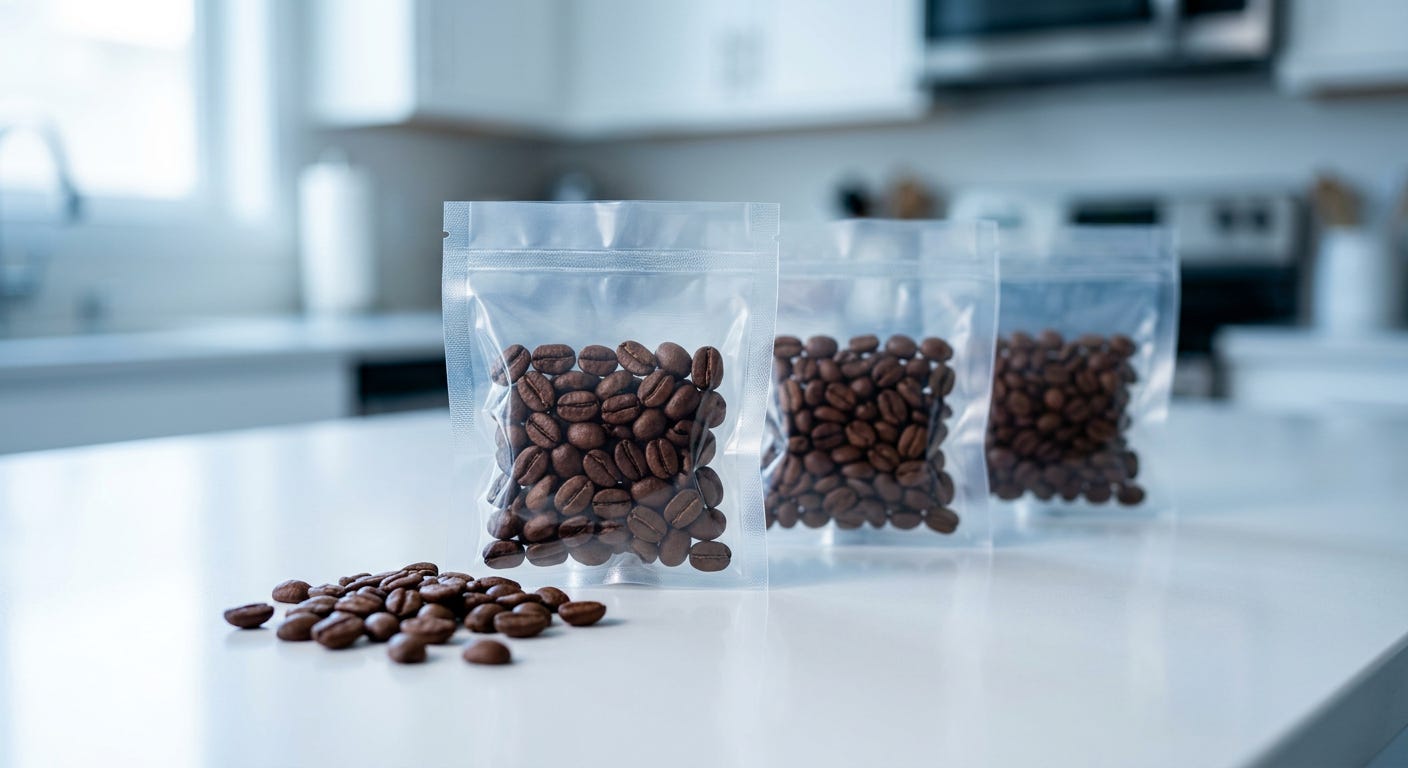
You bought a gorgeous bag of single-origin beans. The roast date is fresh, the aroma is everything. But you’re not going to finish them in ten days. So they sit on the counter, and by day twelve, the shots taste like cardboard. Sound familiar?
Most home baristas think freezing coffee beans is a bad idea. Maybe something they read once or a warning from a café worker years ago. The truth is, freezing is not the problem. Bad freezing technique is the issue. Done right, it’s how the specialty world preserves peak flavor for weeks, sometimes months.
Why Freezing Works When You Do It Properly
Coffee goes stale because of two enemies: oxygen and moisture. The moment a bag is opened, both go to work on the oils and aromatics that make a shot sing. Your freezer, at 0°F (minus 18°C), effectively pauses that degradation. CO2 off-gassing from a freshly roasted bean slows way down. Oxidation stalls. A bean sealed and frozen at its peak will taste substantially closer to that peak when you pull it out weeks later.
The grinder benefits too. Cold beans are denser and more brittle, which means they fracture more cleanly and consistently. Many home baristas grind straight from frozen and report tighter shot-to-shot consistency and slightly lower static. Others prefer to let the sealed dose reach room temperature first to avoid any condensation risk. Both work; the key is picking one approach and sticking with it.
The entire method rests on one rule: single-dose portions, sealed tight, frozen once. Never return them to the freezer after thawing.
The Right Way to Freeze Espresso Beans
Work through these steps once when you open a fresh bag, and you’re set for weeks.
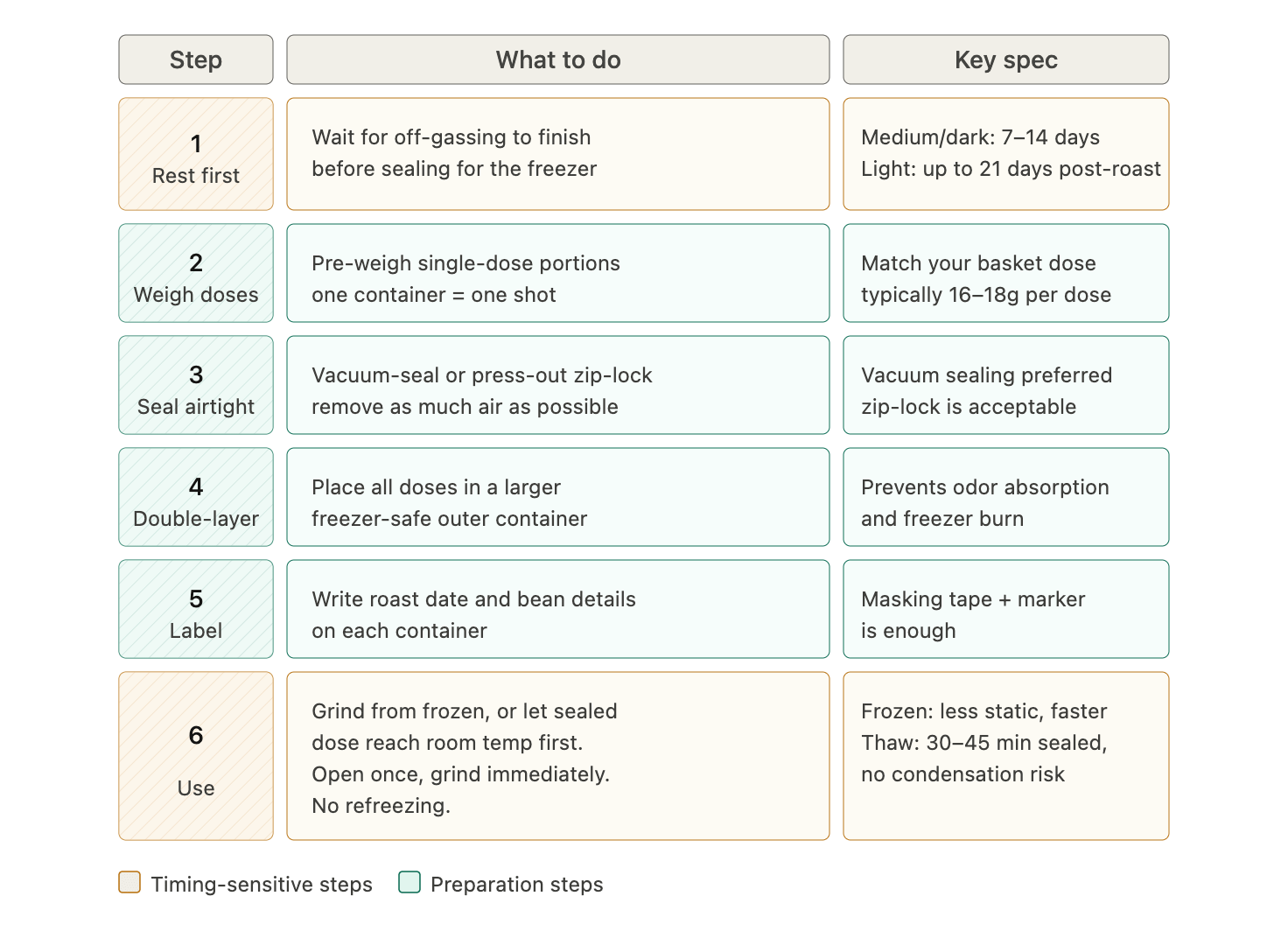
1. Rest the beans first, then freeze. Wait until your beans have completed their off-gassing rest period before freezing. For espresso, that usually means 7 to 14 days post-roast for a medium or dark roast and up to 21 days for a light roast. Freeze too early and you lock in CO2 that will still need to escape, which can affect extraction. If you’re not sure where resting fits into your workflow, the breakdown in Master Every Coffee Roast: The Complete Guide to Prepping Each One for Perfect Espresso walks through how roast level impacts that timeline.
2. Weigh out single-dose portions. Decide your standard dose, whether that’s 16g, 18g, or whatever your basket calls for, and pre-weigh each portion. This eliminates any handling of the frozen mass later. One container equals one shot’s worth of beans.
3. Seal each portion in an airtight container. A small zip-lock bag with the air pressed out works. Vacuum sealing removes the residual oxygen that zip-locks leave behind. The difference in flavor over a 4-week freeze is real.
4. Place all portions into a larger freezer-safe container or bag. This second layer protects against freezer burn and odor absorption. Your beans would rather not smell like last night’s leftovers.
5. Label with the roast date and bean details. Frozen bags look identical after a few weeks. Date everything. A roll of masking tape and a marker are enough.
6. To use: remove one sealed portion and choose your approach. Grind straight from frozen for slightly less static and a faster workflow. Or let the sealed container reach room temperature first, about 30 to 45 minutes, to eliminate any condensation risk. Either way, open the container only once and grind immediately. No refreezing, ever.
Here is a quick-reference overview you can keep handy at the counter:
One Container, One Shot, No Exceptions
The most common mistake I see is bulk freezing: the whole bag goes into a freezer-safe container, and then every morning someone opens it, scoops out a dose, and puts it back. Every time that container warms up and rechills, you’re cycling through temperature swings and introducing moisture. Within a week the beans taste flat despite being frozen.
A subscriber told me she’d tried freezing twice before and given up, convinced it ruined her coffee. When she switched to pre-portioned vacuum-sealed doses, her next bag lasted six weeks, and the final shot tasted nearly as lively as the first. The only difference was not reopening the frozen container.
Geek Corner
Cold beans grind more efficiently because thermal energy plays a role in fracture mechanics. At lower temperatures, the bean’s cellular structure is more rigid, so burrs shear more cleanly through it. You get a slightly narrower particle size distribution, which translates to a more even extraction. Home baristas running the Fellow Opus Conical Burr Grinder at its espresso setting often notice a measurable drop in the static that otherwise scatters grinds across the counter. It’s a real effect, not a placebo.
What You Actually Need
A vacuum sealer, like the FoodSaver FM2000 Vacuum Sealer Machine, handles the individual dose pouches, and it pays for itself quickly if you’re buying quality beans regularly. If vacuum sealing feels like a step too far right now, quality resealable zip-locks with the air pressed out are a solid starting point. The method matters more than the gear.
The goal is simple: freeze a bag at its peak, pull single doses as you need them, and never let moisture touch frozen beans. Do that, and your Saturday morning shot in week four will taste like it was roasted on Thursday.
If you’ve found this kind of practical, independent writing useful, consider becoming a paid subscriber. It’s what keeps me showing up here week after week, chasing down answers to the questions that actually matter at the counter. That moment when a six-week-old frozen dose pulls as bright as a fresh bag? That’s what I’m here to help you replicate.
What’s been your experience with bean storage, and have you noticed your shots tasting different in the second week of a bag compared to the first?
If you know someone who keeps buying small bags every few weeks to stay “fresh,” this piece might change how they think about their whole bean workflow. Pass it along.
Warmly,
Jim
Pull, Quill, Pour Stories
Some links in this post are affiliate links, which means I may earn a commission if you purchase through them at no extra cost to you.