

Turkish Coffee, Modernized: New Flavors, Old Ritual
Turkish coffee gets a modern spin: how to brew it at home with better beans, fresh spices, and smart tweaks that transform a centuries-old ritual.

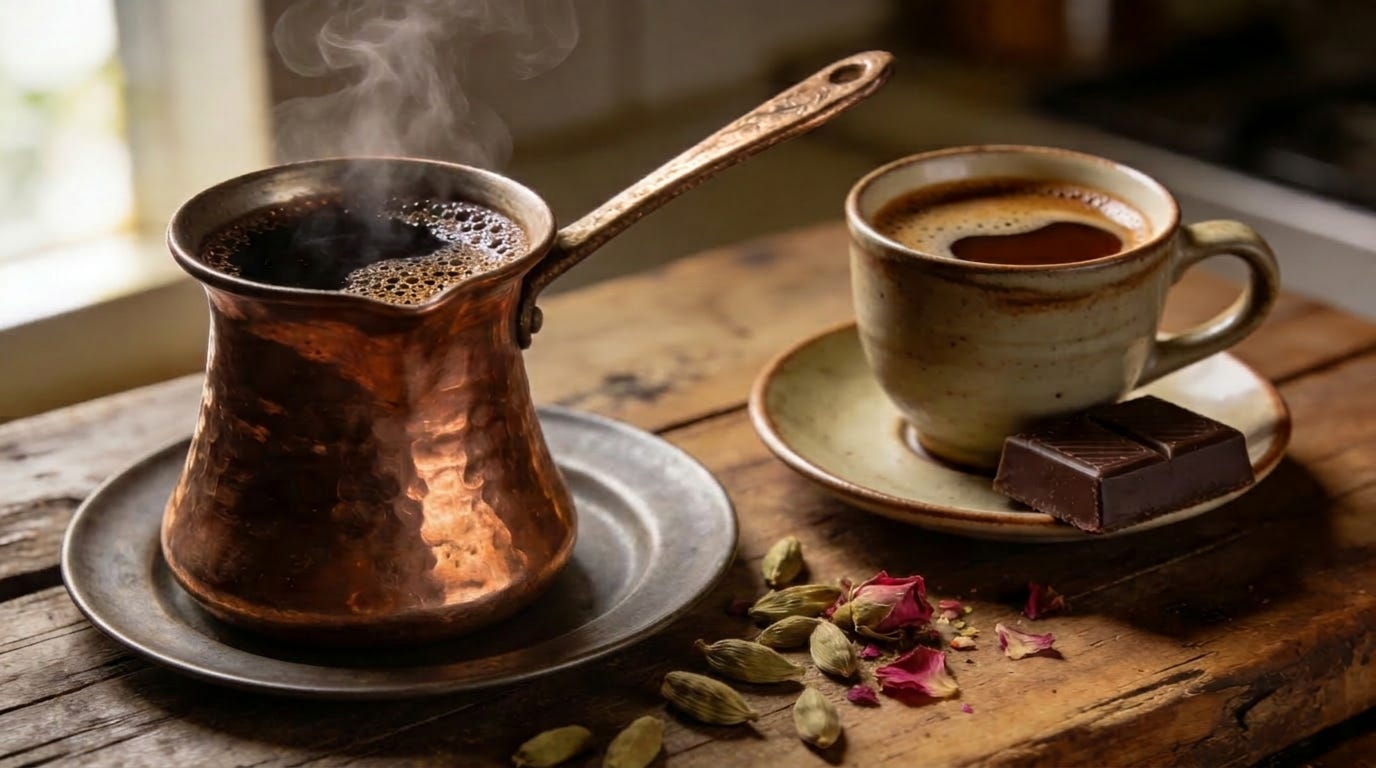
A reader wrote to me about her grandmother’s cezve, a small copper pot that lived on the back burner, always ready. Pre-ground coffee from the same tin, every time. The result was a dense, dark cup that tasted like something between espresso and memory. She assumed the ritual mattered more than the recipe.
It does matter. But the recipe matters too.
When you brew Turkish coffee with single-origin beans, freshly ground to flour, the cup changes completely. Cleaner, more layered, with a floral lift underneath the familiar bitterness. Same pot. Same ritual. Better coffee. The method is centuries old, and it responds to good ingredients the same way any other brew does.
Here is what most people get wrong: Turkish coffee is not defined by pre-ground blends and a handful of cardamom. It is a brewing method, one of the oldest we have, and the three variables that move the needle are beans, grind consistency, and heat control.
Why Grind and Heat Are Everything
Turkish coffee brews without a filter. The grounds stay in the pot and settle in the cup. Everything goes into the water, which means an uneven grind produces a gritty, bitter result, and rushing the heat closes the extraction window before the good flavors develop.
The grind needs to be finer than espresso, closer to powdered sugar in texture. Most burr grinders, even solid ones, struggle at this range. A dedicated hand mill built specifically for Turkish brewing does it more cleanly. The Zassenhaus Manaos Hand Mill uses cast iron burrs to produce a genuinely flour-fine, consistent grind. It is slow and satisfying, and the difference in the cup is noticeable.
Heat control is the other lever. The goal is a slow, steady rise over 4 to 5 minutes, not a quick boil. You want a fine, dark foam to form at the surface and begin to climb toward the rim. Remove the cezve just before it breaks. That foam is not decoration. It is evidence the brew went right.
What to Update, What to Keep
The traditional recipe holds: one heaping teaspoon of grounds per 2.5 oz (75 ml) of cold water, sweetened to taste, brought up slowly. Keep all of that.
What you can change is the bean, the spice, and the finish.
For beans, skip the pre-ground blends. A medium-dark single-origin from Ethiopia or Yemen performs beautifully here. If you want a more in-depth understanding of how roast level shapes flavor before you start experimenting, Master Every Coffee Roast: The Complete Guide is worth a read first. Ethiopian coffees carry jasmine and stone fruit notes that come through cleanly in this unfiltered style. Yemeni beans run earthier and more chocolatey, pairing naturally with warm spice additions.
For spice, cardamom is the classic choice and still a great one. A small pinch of ground cinnamon added directly to the grounds works well too, as does a tiny amount of dried ground rose petals. Half a teaspoon for two servings is enough either way. These work with the coffee’s natural aromatics rather than masking them.
For the finish, serve with a piece of good dark chocolate or a dried fig on the side. The contrast does something interesting to the aftertaste.
Step-by-Step at the Stove
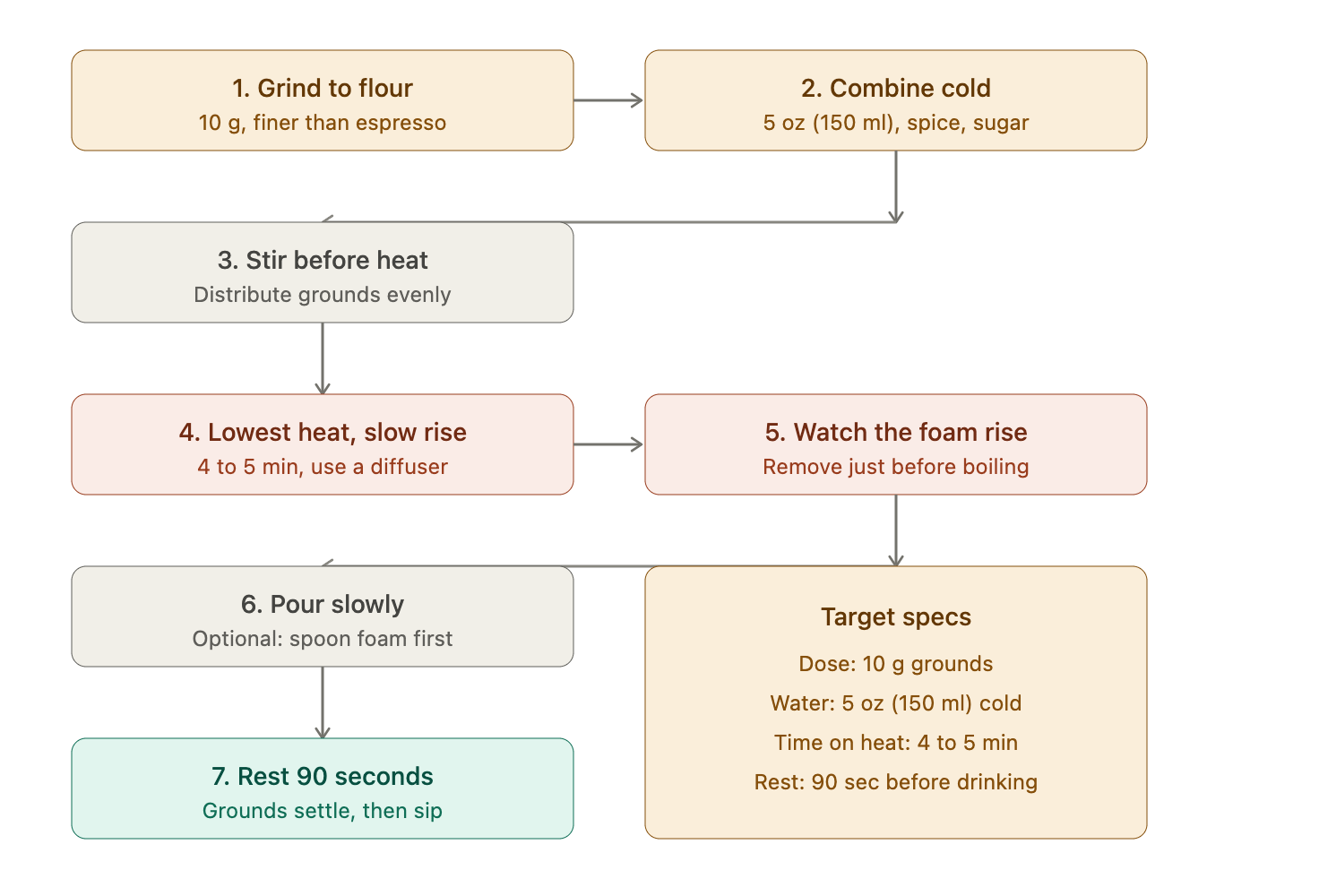
1. Grind to a very fine powder. Use 10 g of coffee for two small cups, ground finer than espresso, close to powdered sugar in texture.
2. Combine coffee, cold water, and any additions in the cezve. Use 5 oz (150 ml) of cold, filtered water. Add sugar now if you want it: one teaspoon for medium sweet, two for traditional. Spice goes in at this stage as well.
3. Stir before applying heat. This distributes the grounds evenly and prevents clumping at the bottom.
4. Set to the lowest heat possible. A diffuser helps if your burner runs hot. You want a slow, controlled rise over 4 to 5 minutes.
5. Watch for foam. A fine dark foam forms and begins to rise toward the rim. This is your signal. Do not let it boil over.
6. Remove from heat as the foam peaks. For a more layered result, spoon a bit of foam into each cup first, return the pot to heat briefly, then pour.
7. Pour slowly and rest for 90 seconds before drinking. The grounds need time to settle. Drink down to, but not through, the sediment at the bottom.
The Gear Worth Having
You do not need much. A small copper or stainless cezve in the 6 oz to 8 oz (177 ml to 237 ml) range, a fine grinder, and a heat diffuser if your burner runs hot.
The Arzum Okka Minio Automatic Turkish Coffee Machine automates the heat curve and pulls the pot back before a boilover. It is not as meditative as the stovetop method, but it is consistent, and it earns its counter space if you brew Turkish coffee regularly.
For stovetop work, the Turkish Coffee Hand Grinder is a compact, well-built mill calibrated specifically for this grind range. It produces a more uniform powder than most standard burr grinders at their finest setting.
Geek Corner
Turkish coffee is an unfiltered, full-immersion brew: no paper removes the oils, fine particles, or dissolved solids. This raises body and total dissolved solids significantly compared to filtered methods. The flour-fine grind increases surface area, which accelerates extraction. That is why low, controlled heat over 4 to 5 minutes matters so much. A slow rise gives you time to read the foam and pull the pot at the right moment, before bitterness runs ahead of the sweetness and floral notes underneath.
What the Cup Actually Tastes Like
With a good Ethiopian bean, ground fine, heated slowly, served alongside a piece of dark chocolate: bright up front, a thick velvety body, faint jasmine in the steam, and a finish that lingers longer than most espresso shots.
The ritual is already there. Better beans and a little patience are all that change.
If this kind of writing is useful to you, paid subscribers are what keep it going: independent, unhurried, and free of outside influence. The detail that stayed with me putting this piece together is that the foam is not just a visual cue. It is a sign the extraction window is still open. Worth slowing down to notice.
What bean are you most curious to try in the cezve? Ethiopian and Yemeni are where I would start, but I would love to hear what you have been reaching for.
If you know someone who has been curious about Turkish coffee but unsure where to begin, pass this along. It gives them everything they need to pull a good cup without overthinking it.
Warmly,
Jim
Pull, Quill, Pour Stories
Some links in this post are affiliate links, which means I may earn a commission if you purchase through them at no extra cost to you.
Grind size! It really is the secret boss battle here. My burr grinder never got close to powdered sugar, until I gave up and bought a dedicated mill. Worth every penny.