

Vietnamese Coffee at Home: Phin, Condensed Milk, and Your Espresso Machine
Learn how to make Vietnamese iced coffee at home with a phin filter or your espresso machine. Real ratios, real technique, and why the milk matters.

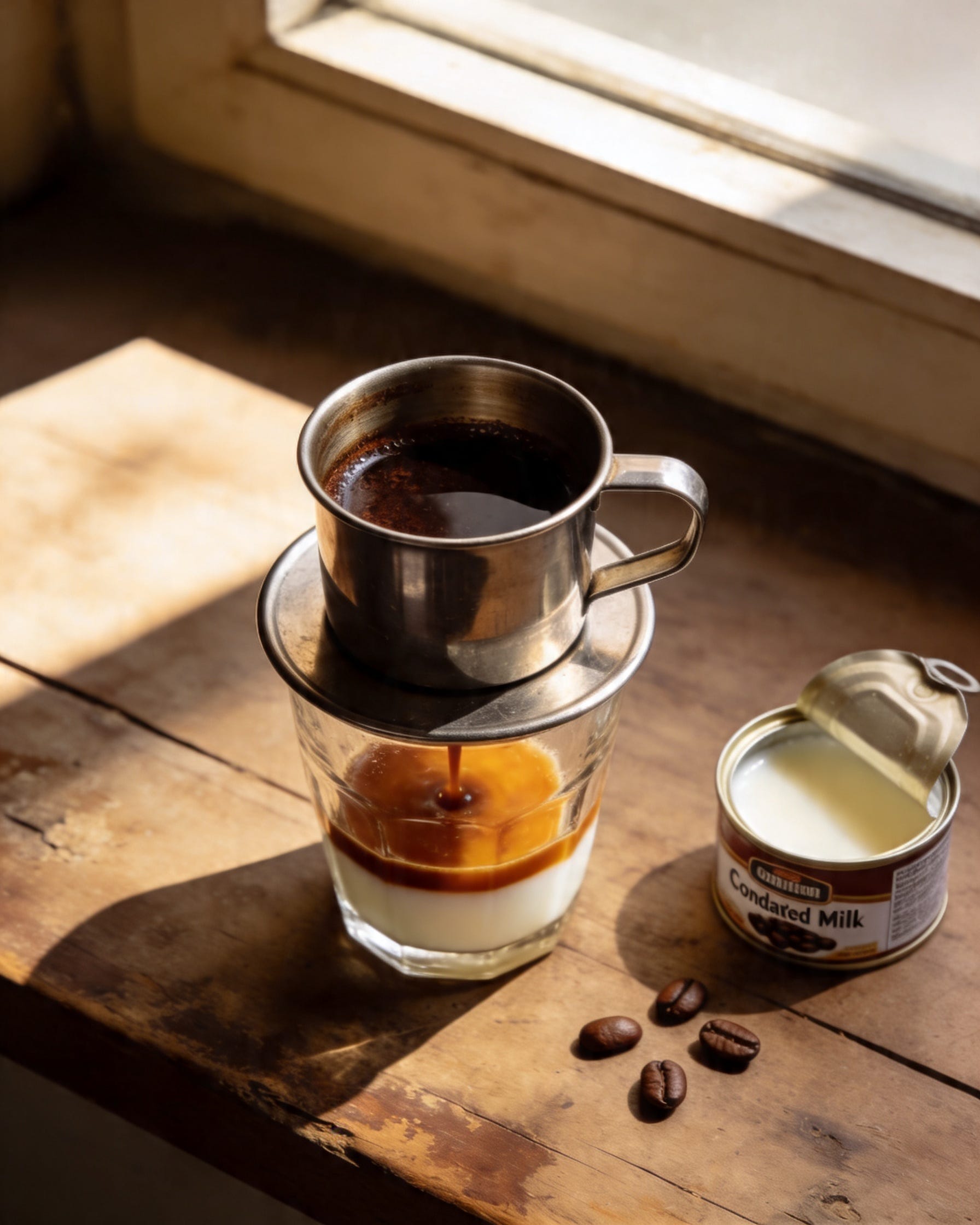
The question came up at a friend’s place last summer. She’d been making what she called Vietnamese iced coffee for months: dark roast, ice, condensed milk, a French press. It tasted fine. But it didn’t taste right. The missing piece wasn’t technique. It was the bean.
Vietnamese coffee at home is built on robusta, and that’s not a workaround. Vietnam produces robusta almost exclusively, roughly 95 to 97 percent of total output, and the flavor tradition developed entirely around that variety. Robusta is higher in caffeine, lower in acidity, and more bitter than arabica. The condensed milk isn’t softening a delicate cup. It’s meeting a strong one on equal footing. Once that relationship clicks, the whole drink makes sense.
What to Buy
For the clearest path to an authentic result, Nguyen Coffee Supply Hanoi Robusta Whole Bean Dark Roast is the place to start: 100% robusta, well-sourced, and available online. Some products mix in arabica, excelsa, and catimor alongside robusta, which shifts the profile depending on which bag you pick up. Read the label.
One clarification worth making: Cafe Du Monde shows up on a lot of Vietnamese coffee lists, but it’s a chicory blend. The bitterness reads as familiar, but the source is different. It’s its tradition, not a robusta stand-in.
The Phin Method, Step by Step
A phin is a small Vietnamese drip filter: a stainless-steel chamber and gravity plate that sits directly on your glass. They run $8 to $15 (7 to 14 euros) and are worth having even if your espresso machine handles morning duty. The Vietnamese Coffee Filter Set is consistent, well-reviewed, and easy to find.
Add 2 to 4 tablespoons of sweetened condensed milk to your glass.
Grind 20 to 25g of robusta to medium-fine: noticeably coarser than espresso, finer than pour-over.
Load the phin chamber and set the gravity plate on top with light, even pressure.
Bloom: Pour roughly 0.7 fl oz (20ml) of water at 200°F (93°C) over the grounds and wait 30 seconds. Traditional preparations often skip this and fill straight to the top. The bloom promotes more even extraction and costs half a minute. Worth it.
Fill the chamber to 5 to 6 fl oz (150 to 180ml) total. Cover with the lid.
Brew time runs 5 to 7 minutes. Dripping too fast means grinding finer or pressing the gravity plate down slightly. Too slow, back off a touch.
Once the drip stops, lift the phin away. Add ice and stir.
Geek Corner
Robusta carries roughly twice the caffeine of arabica and higher chlorogenic acid levels, which produce that characteristic astringency. Condensed milk’s fat and sugar don’t chemically reduce bitterness. They coat the palate and shift how you perceive it. Same principle as cream in a dark-roasted espresso: extraction stays fixed, the experience of it changes.
The Espresso Machine Version
If you’d rather skip the wait, your machine gets you close. The target is a concentrated shot that mimics phin strength and body, not the brightness you’d dial in for a specialty espresso.
Use a Vietnamese robusta blend or a dark-roasted robusta. Pull at a 1:1.5 ratio: 18g in, 27g out. Add condensed milk to the glass first, pour the shot over ice, and let it settle a few seconds before drinking.
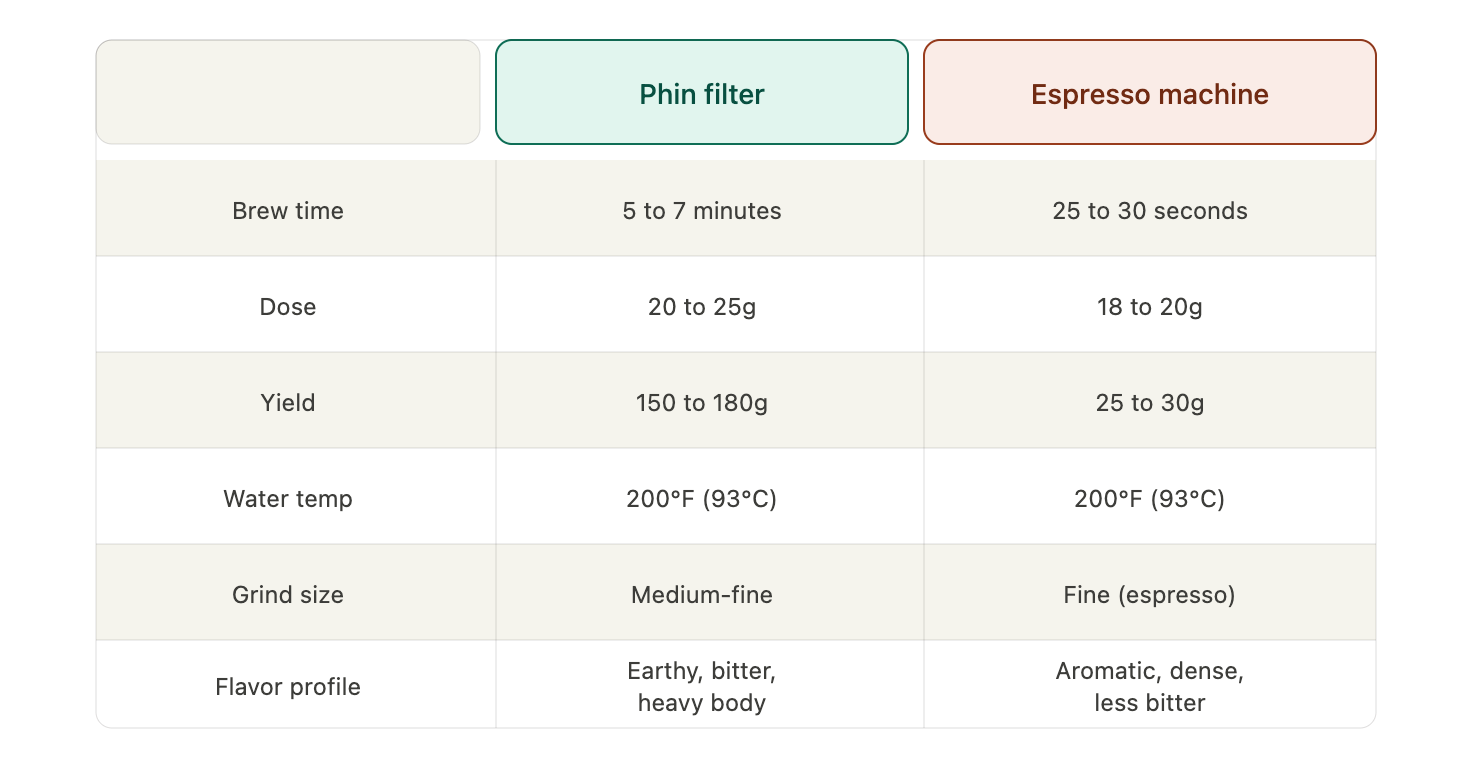
The machine version differs from the phin in real ways: it's faster, slightly more aromatic, and a touch less bitter. The phin’s extended contact time pulls more body and more of that earthy character. Neither is wrong. There are two routes to the same destination, and working through both sharpens your sense of what concentration and contact time are doing in the cup. For a closer look at how roast level shapes those variables at your machine, Master Every Coffee Roast: The Complete Guide to Prepping Each One for Perfect Espresso is worth keeping open alongside this one.
Here’s how the two approaches compare:
What This Cup Teaches You
There’s a broader lesson buried in this drink. Bitterness in specialty espresso culture is something to manage, dial back, and balance away. In Vietnamese coffee, it’s the foundation. The condensed milk, the ice, the slow melt as you drink: none of that is garnish. It’s the architecture.
When a robusta shot tastes hard-edged straight from the portafilter, that’s not a flaw to fix. It’s half a recipe waiting for the other half. Strength and bitterness work when the rest of the cup is built to match them.
Posts like this one, where an entirely different tradition ends up reframing how I think about extraction at home, take real time to do right. If that kind of writing is worth something to you, becoming a paid subscriber is the best way to keep it coming.
What robusta or dark blends have you pulled at home? Have you tried tightening the ratio to push concentration, or do you tend to back off and dose lighter to take the edge off?
If you know someone who keeps meaning to try Vietnamese iced coffee at home but hasn’t gotten there yet, pass this along. It might be the nudge that finally gets a phin on their counter.
Warmly,
Jim
Pull, Quill, Pour Stories
Some links in this post are affiliate links, which means I may earn a commission if you purchase through them at no extra cost to you.
OMG just what I have been looking for, thanks!!