

Water Quality for Espresso Machines: A Complete Guide to Tap, Filtered, and Spring Water
Discover why water quality matters for espresso machines. Compare tap water, filtered water, and spring water to find the best option for perfect extraction and machine longevity

Water is the overlooked ingredient in espresso, yet it makes up nearly 98% of your finished shot. Its mineral content, pH, and purity fundamentally shape coffee’s flavor and your machine’s durability. For a home barista, understanding water chemistry is essential to both espresso quality and maintaining your equipment.
Why Care About Water Quality?
Water’s mineral makeup does more than alter taste; it governs extraction chemistry and machine health. When hot water meets coffee grounds under pressure, minerals such as calcium and magnesium catalyze extraction, unlocking sweetness, body, and complexity. Too few minerals, and espresso tastes flat; too many, and bitterness or harsh acidity overwhelms.
Hard water, rich in minerals, leaves behind limescale in boilers and pipes, reducing heating efficiency and clogging parts. On the other end, ultrapure water (distilled or reverse osmosis) can corrode metal and damage components by causing underextraction. Proper water chemistry is the safe middle ground for flavor and longevity.
Understanding Water Hardness
Water hardness quantifies dissolved minerals, especially calcium and magnesium. For espresso, most experts advocate a hardness range of 50–80 parts per million (ppm). Water above 85 ppm accelerates scale buildup, requiring more frequent descaling. Below 35 ppm, extraction suffers, and machine sensors may malfunction.
To measure your water hardness, check your local utility’s water report or use inexpensive test strips or digital meters. Water in the 50–80 ppm window extracts great flavors and keeps descaling intervals to every 3–4 months.
Comparing Water Sources
Tap Water: Convenient but Variable
Pros: Readily accessible, usually safe, familiar mineral profile
Cons: Highly variable minerals and chlorine by location, often too hard, may carry off-flavors and particulates
Tap water’s mineral content depends entirely on geography and treatment strategy. Soft tap water can work well, but most regions have hard water or aggressive chlorine treatment that harms taste and machine health. Seasonal changes can also affect consistency. Check municipal reports before relying on tap alone. If hardness is modest but chlorine is present, a simple carbon filter can improve taste.
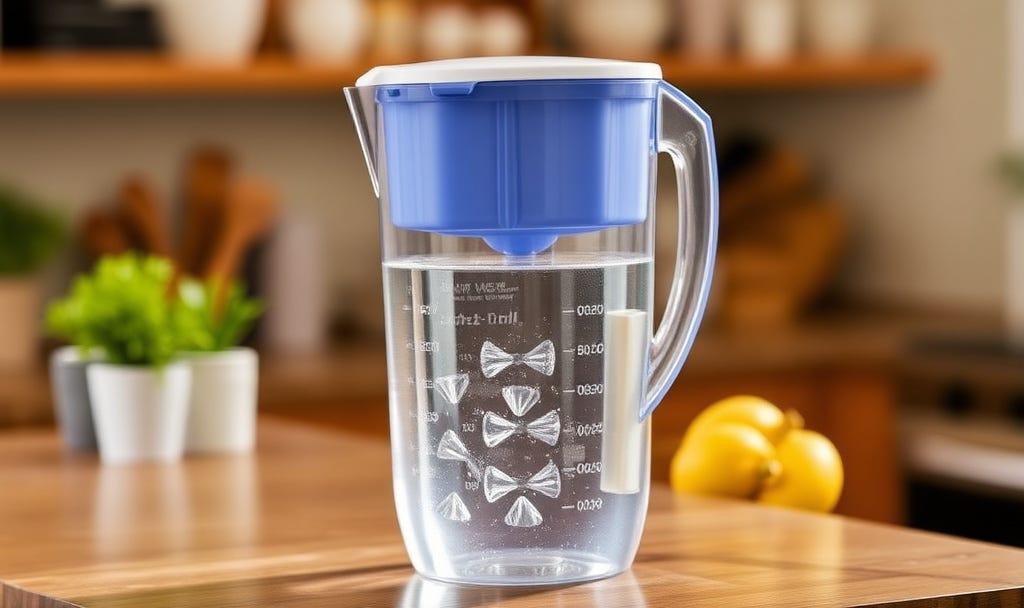
Filtered Water: Reliable, Affordable, and Effective
Pros: Removes chlorine and off-flavors, retains good minerals, enhances consistency and flavor, reduces scale, and is compatible with most espresso setups.
Cons: Needs regular filter replacement, filter effectiveness varies, and may require multiple stages for ideal softness.
Filtered water solves the most common espresso problems. Carbon filters (like Brita) eliminate chlorine while retaining beneficial minerals, revealing the complexity of your beans. For hard water, ion-exchange resin filters further soften and optimize mineral content for espresso and machine health. Maintenance is a trade-off to change filters every 2–3 months but prevents pricier and frequent machine descaling.
On Descaling: The better your water, the less you’ll need to descale your espresso machine. Poor water demands cleaning every 2–3 months; optimal filtered water can extend this to 3–4 months, saving time and money.
Spring Water: Natural but Risky
Pros: Naturally filtered, mineral-rich, no chemical additives
Cons: Highly unpredictable mineral content, often too hard or high in chloride, environmentally wasteful (bottles), no standardization, higher cost
Spring water is often marketed as “pure,” but its variable mineral profile frequently causes rapid scale buildup or corrosion. Plastic waste is another concern. Unless you can verify the mineral content is in the safe 35–85 ppm range, filtered tap water is more reliable.
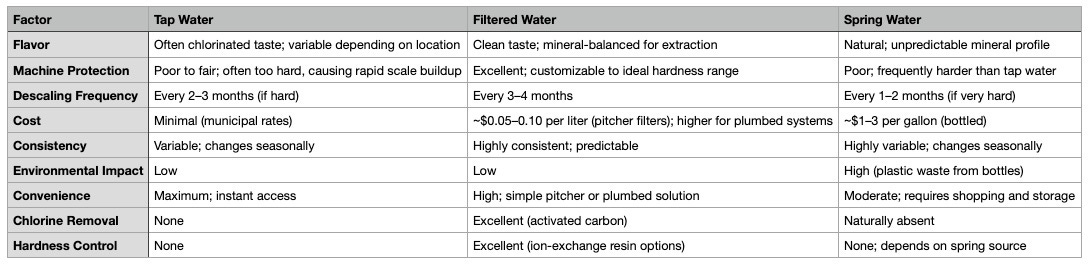
Comparative Analysis: Tap vs. Filtered vs. Spring
Which Water Should You Use?
Filtered water is best for most home baristas. Here’s an action plan:
Test Tap Water Hardness: If you’re in the 50–85 ppm sweet spot and the taste is good, use a basic carbon filter to remove chlorine.
If above 85 ppm: Install a multi-stage filter system (with both carbon and ion-exchange resin) to reduce hardness and optimize flavor.
If below 35 ppm: Remineralize using specialized mineral packets.
Avoid Distilled or Pure Reverse Osmosis Water: These can hurt both espresso quality and machine reliability unless minerals are added back.
Spring Water: Only use if you verify the mineral profile fits the recommended range.
Expert Tip: Minerals aren’t impurities they’re essential for great extraction. Calcium gives body, magnesium boosts fruity and sweet notes, and bicarbonates buffer acidity. Aim for 50–80 ppm for espresso that’s both vibrant and balanced.
Practical Steps for Water Optimization
Measure Hardness: Use strips or a meter ($10–30).
Review Local Quality Reports: Search online for your municipal results.
Choose Appropriate Filtration: Carbon for chlorine; multistage systems for hardness.
Replace Filters on Schedule: Every 2–3 months for pitchers, annually for larger systems.
Set a descaling routine: 3–4 months for filtered water; more frequently if needed.
Taste Test: Chalkiness, bitterness, or flatness means water chemistry is likely off.
Conclusion
Water quality is fundamental for both superb espresso and machine reliability. Tap water is convenient but rarely ideal; spring water is unpredictable and wasteful. Filtered water is the practical, science-driven choice, offering excellent taste and machine protection. With pitcher filters running $20–40 and plumbed systems $100–500, the modest investment delivers better espresso and saves on potential repairs.
Your palate and your espresso machine will reward this attention to water chemistry. If you’ve noticed flavor or performance changes since adjusting your water quality, share your experience and consider which filtration method best suits your setup.
Have you noticed a difference in your espresso’s taste or your machine’s performance since testing your local water quality, or is this your first time considering water chemistry as a factor in your brewing?
Based on your water hardness results, which filtration approach resonates most with your situation: the simplicity of a pitcher filter, the commitment of a plumbed softening system, or are you still undecided about whether the investment is worthwhile?
Warmly,
Jim
Pull, Quill, Pour Stories